Why Choose Our Plant
23+ years, 350+ installations, ISO 9001:2015 and MoRTH specification: what sets a Vinayak plant apart.
See why →
Why most road contractors choose continuous drum mixing, and where a batch plant still wins.
No batch cycles: hot mix flows as long as aggregate and bitumen are fed, which suits steady paving.
No hot elevator, hot screen, hot bins or weigh hoppers, so there are fewer wear parts and less maintenance.
A simpler plant generally costs less than a batch plant of similar output.
Proper drying in an insulated drum with a dual-stage burner keeps fuel use per tonne down.
Bitumen is metered against measured aggregate flow for uniform coating and saving.
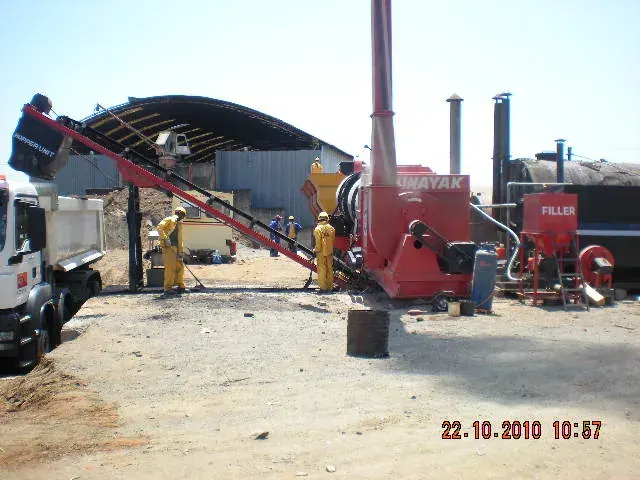
Available fully mobile on chassis, pre-wired and needing no civil works.
Needs about 35 m × 35 m to 40 m × 40 m of open land depending on model.
SCADA/PLC control with a touch-screen HMI and print-out; simple to train crews on.
If your contract needs frequent mix changes or batch-by-batch weighing records, a batch mix plant may be required. For everything else, a drum mix plant usually gives the lower cost per tonne.
See where these advantages pay off on the applications page.
Generally yes. It has fewer components to maintain and is designed for low fuel consumption, though actual cost depends on output, fuel and site conditions.
23+ years, 350+ installations, ISO 9001:2015 and MoRTH specification: what sets a Vinayak plant apart.
See why →
Highways, city roads, airports, ports and industrial yards: where drum mix plants are used.
See applications →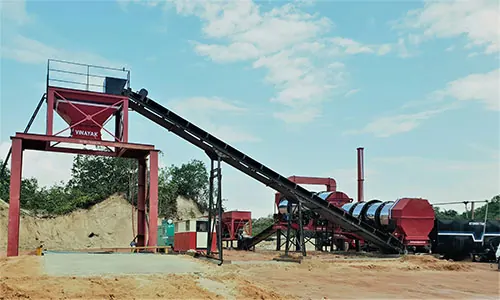
Continuous drum-mix plants in DM-45, DM-50 and DM-60 models, 40 to 120 TPH, stationary or mobile.
View models & specifications →Share your required output, mix type and site location. The Vinayak team will recommend a model and send a quotation.
